 EN
EN
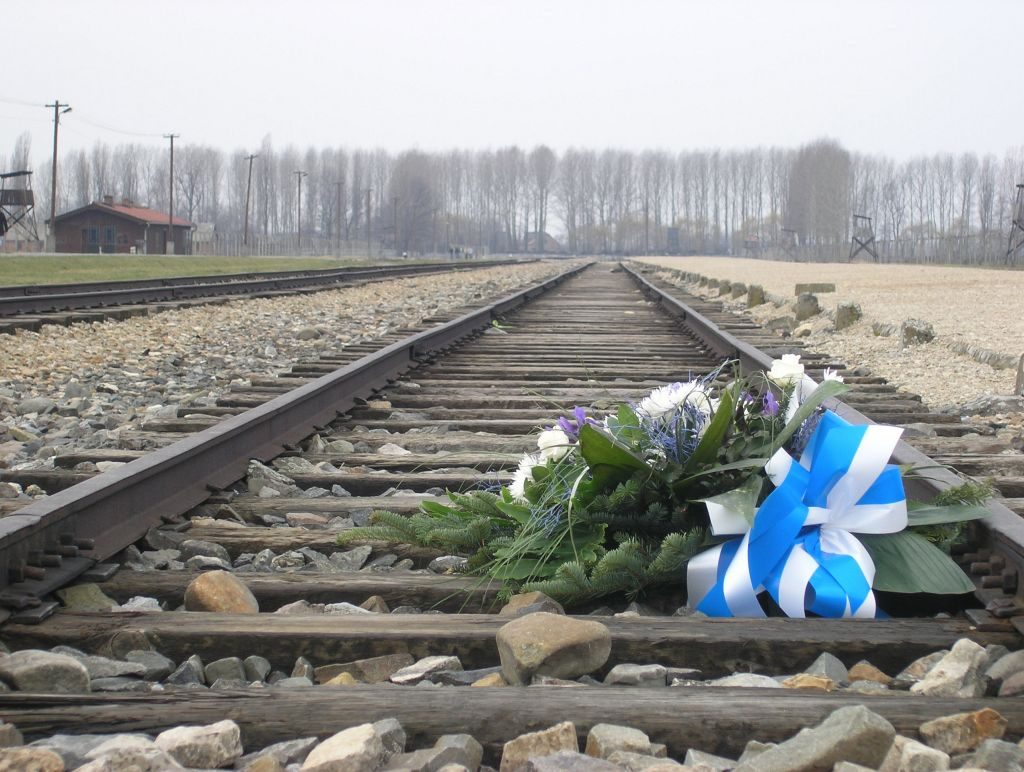
KZ Auschwitz - Birkenau - Foto: Wikipedia-Commons-
27 January – International Holocaust Remembrance Day
International Holocaust Remembrance Day on 27 January was established by the United Nations in 2005 to commemorate the Holocaust and the 60th anniversary of the liberation of the Auschwitz-Birkenau concentration camp.
The day, which marks the anniversary of the liberation of the Auschwitz-Birkenau concentration camp by the Red Army in 1945, was already observed as a day of remembrance in the United Kingdom and Germany (Day of Remembrance for the Victims of National Socialism, since 1996), among other countries, before the UN proclamation.
On 18 October 2002, the education ministers of the states represented in the Council of Europe decided to introduce a day of remembrance for the Holocaust and the prevention of crimes against humanity, leaving the choice of the day to the member states.
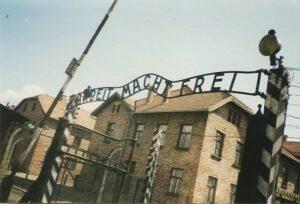
Auschwitz ‘Arbeit macht frei’ (Work makes you free) – Entrance gate – Photo: Horst Milde
Most states, including Germany and Switzerland, chose 27 January. In connection with the day of remembrance, crimes against humanity, genocide and especially the Holocaust are to be addressed in school lessons.
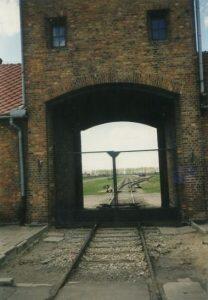
Auschwitz – Entrance tower – Photo: Horst Milde
After the United Nations General Assembly had already commemorated the 60th anniversary of the liberation of the concentration camps at its 28th special session on 24 January 2005, it declared 27 January the International Day of Commemoration in memory of the victims of the Holocaust during its 42nd plenary session on 1 November 2005 through its Resolution 60/7. plenary session on 1 November 2005, declared 27 January the International Day of Commemoration in memory of the victims of the Holocaust.
It has been observed worldwide since 2006. (Source: Wikipedia)
27 January 2026 marks the 81st anniversary of the liberation of the Auschwitz extermination camp by the Ukrainian army. In Auschwitz alone, the Nazis murdered more than one million people between 1940 and 1945.
Most of them were Jews, but more than 21,000 Sinti*zze and Roma*nia also perished there. Under the Nazis, Sinti and Roma, like Jews, were considered racially inferior.
They were systematically registered, forced to perform hard labour or undergo medical experiments, and deported to concentration camps. According to conservative estimates, several hundred thousand Sinti and Roma died throughout Europe as a result of the persecution measures of the Nazi regime. Only a few survived the inhuman terror.
The liberation of the Nazi extermination camp Auschwitz is an occasion to remember with sympathy and respect those who were marginalised, degraded, persecuted and murdered by the Nazi regime and by German citizens because of their faith, their origin, their disability, their political convictions or their sexual orientation.
„What was done or omitted within the structures of German society under National Socialism must never be repeated. We say: “Never again!”. To this end, we must do everything in our power and assume social responsibility.
Learning from history means acting today.
Today, we remember with great sympathy those people who were excluded from German society because of their faith, their origin, their political convictions or their sexual orientation.
Cast out of society, exposed to terror, deprived of their civil rights, many of them ended up in the Nazi extermination camps.
“Never again” – that is the message of the survivors to future generations.
Horst Milde – with material from the dsj
