 EN
EN
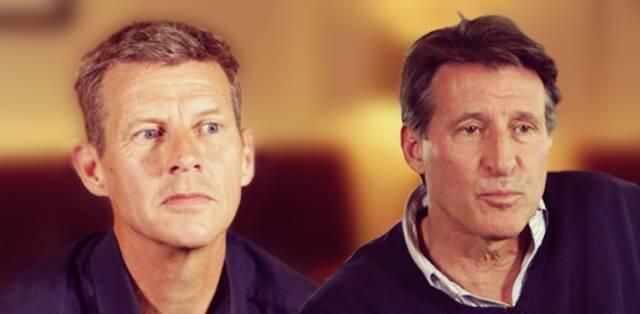
Cram, who still holds the European mile record, said: “The year of the first London Marathon I was watching on TV. It was a new event, it was new to have something like that on TV. Athletics was cranking up and I was part of that, I was still only 20, but marathon running seemed a million miles from what I was doing.
“I was surrounded by great athletes watching and there was a lot of interest. The thing that stood out was the numbers. By comparison to today it wasn’t as big, but that was the first time I’d seen that number of people on television taking on what we then considered to be the greatest challenge you could do.”
Coe, who twice won Olympic gold over 1500m and headed the organising committee for the London 2012 Olympics and Paralympics, praised the unsung heroes who help make the London Marathon the success it is.
“As somebody who has helped put an event on, I know you just cannot do it without volunteers,” he said. “The difference between a good and a great event is the volunteers. They’re the first people you see when you get to the course.
“There is not a single sports event you could stage without volunteers and the London Marathon set the scene. We talk about the Games Makers at London 2012 but the London Marathon had actually tapped into that environment 30 years earlier.”
Both Coe and Cram participated in the London Marathon after their competitive athletics careers had finished.
Coe, who completed the race in 1991, said: “The one thing I remember about my London Marathon performance is I did just about sneak in under three hours. I ran for charity with a training partner and I had a ball of a time. It was one of the great days out. From my perspective, I wanted to do what millions of people want to do and say ‘I ran the distance’, which I did.”
Cram ran the famous event in 1998 and 1999, clocking an impressive 2:35 on his second appearance. He explained: “Having watched the London Marathon on TV and for a few years in The Mall, you cannot resist the temptation to do it. But when I did decide to do it, I didn’t know what to expect. I was taken aback. I remember walking to the start with people who were all asking, ‘What are you doing?’
“It was a really good experience from getting to the Start Line and joining the throng, and I loved every minute to such a point I came back the year after. I have nothing but great memories of running it.”
Radcliffe’s return
Speaking of Radcliffe’s return to the London Marathon for the first time in a decade, Coe said: “She’s had a colossal career, no woman has made a greater contribution to the marathon. It’s very easy to say she has made a seismic contribution to distance running, both on the track and on the road, but there’s something else she did. She almost democratised our sport for women.
“She gave women permission to feel they could go out and run, and be a part of something like the London Marathon. It’s not just the elite contribution she’s made, but it’s the generation of runners, male and female, who have taken up the sport because of her.”
Cram added: “For Paula, it was a case of waiting for the right event to come along. She’d pretty much exhausted what she was capable of the track – where she was brilliant but couldn’t win enough medals – but the marathon was a perfect event for her, given her mentality.
“The way she approaches training and her mental strength – she’d always been a front runner. It was made for her and she was made for it.
“She went for it without any fear. She didn’t see if she could run 2:30, then 2:25, etc. She went right in at the deep end and had no qualms about attacking it and having faith in her own ability and what her training had told her.
“For her, it translated into a great marathon time from the beginning. It woke everybody up, including a lot of women. It made everybody reassess what was possible for women, and that’s not something to be undermined. It made everything that had happened until that point seem like it had taken too long.
“She shouldn’t be underestimated as a real pioneer of women’s marathon running and they still haven’t caught up. She’s been phenomenal and has persuaded a lot of women to have a go at 5Ks, 10Ks, marathons, and so on. There’s plenty of people out there today still trying to be Paula Radcliffe.
“I hope she enjoys it on Sunday, and soaks up the atmosphere and all the love there is for her out there.”
To keep track of Radcliffe, and the rest of the event, on Sunday, see our guide to following the race.
Source: Virgin Money London Marathon
