 EN
EN
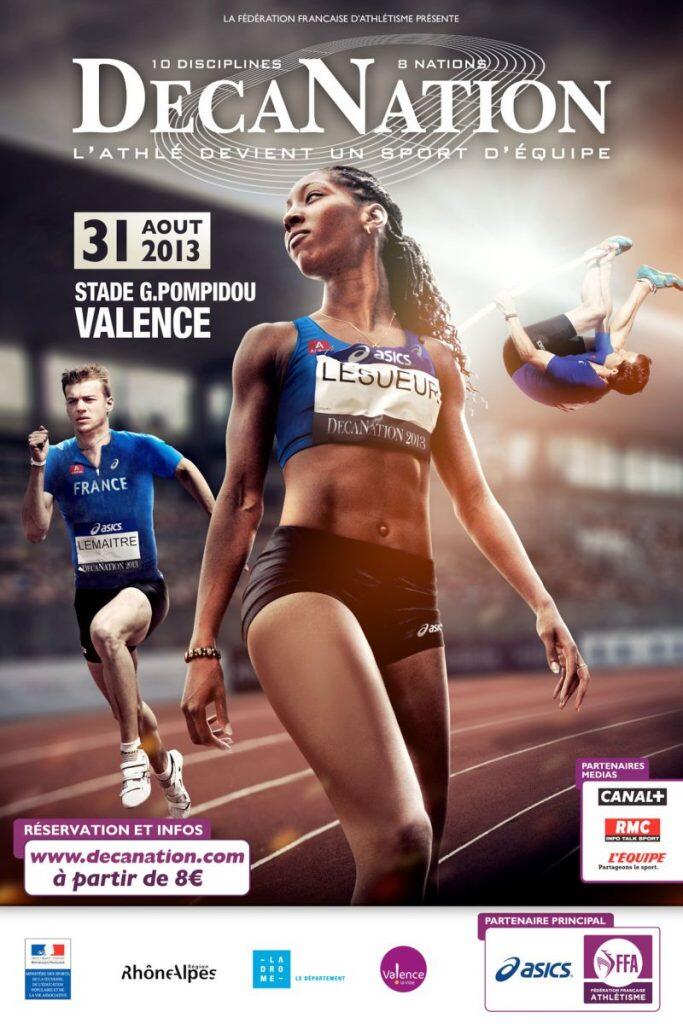
The DecaNation, an absolutely unique promotional tool for athletics ©DecaNation
The DecaNation, an absolutely unique promotional tool for athletics
The DecaNation is once again breaking new ground. It has a new site, the Stade Georges Pompidou in Valence in France’s Drôme department. It has a unique date, 31 August. And most importantly it has a new billing that has never before been offered to French audiences.
In addition to the French team, the competition is playing host to five national teams: the United States, Russia, Germany, Italy and Cuba. Another new feature of the 2013 edition are two multinational teams for the Balkans and the Nordic countries.
The lowdown from Jean Gracia, CEO of the French Athletics Federation (FFA) and vice-president of the European Athletics Association (AEA):
What are the major new features of the 2013 running of the DecaNation?
Jean Gracia: For the first time in the history of the event, created back in 2005, we’re playing host to two teams involving several countries: the Balkans and the Nordic countries. In this way we’re rallying together a whole section of Europe, involving nations who have never participated in the DecaNation before. The aim of this unique competition has always been to promote athletics. This naturally includes France, but also the rest of the world. I believe that this year we’ll be able to pull that off again by proposing a unique and original formula. Another new feature of the 2013 edition is the presence of Cuba, with a team who will be debuting at the event.
What does the DecaNation represent for these multinational teams?
It’s a very important meeting. The Balkans for example has formed into an association. They get together nine times a year for competitions. However, their association had never had the opportunity to train up a team of top athletes for an international match. The DecaNation will be an opportunity to do just that.
Is the DecaNation formula encouraged by the AEA?
Yes. Since the early days, the DécaNation has always emphasised the notions of the man-to-man struggle and team spirit. We had to battle a little in the early years to impose the idea and the concept, particularly with regard the press. Today, it’s made a niche for itself and has become an everyday feature of life. The United States for example has always sent out a team. When we don’t mention it to them for a while, they soon find out what’s happening! The DecaNation isn’t aiming to compete against the major international meets. It offers an alternative. The AEA sees it as a tool to promote athletics.
The 2013 edition is taking place a little earlier than on previous years, on 31 August. Is this a good date?
I think so. We’ve always tried to place ourselves after the main event of the season, without competing against the major meetings. This year, the DecaNation will be contested between the meeting in Zurich (29 August) and Brussels (6 September). In principle it’s a highly favourable date.
Back in the spring, the FFA signed a cooperation agreement with its Japanese counterpart. Are we likely to see a Japanese team participating in the DecaNation in the near future?
It’s likely. We’re discussing the matter with the Japanese Federation. The agreement we’ve signed with them relates to a vast programme of exchanges and cooperation, but the DecaNation is indeed part of that.
Will the concept behind the DecaNation remain a grand festival of athletics?
Of course it will. Through its concept, its spirit and its position in the season, the DecaNation remains a festive event, where the French public can come along and see French and overseas athletes, back from the summer’s major international championships, and celebrate the medal haul with them.
What do you think about the DecaNation
Dobromir Karamarinov: I’m very happy, in the name of the Balkan Association, that we have been invited by the FFA to participate in this year’s event. I’d like to thank the directors of French athletics for this invitation. I greatly appreciate the concept behind this competition, of one team, one country. For the Balkan selection round, it’s very important to have the opportunity to size up the other nations. It boosts team spirit. The DécaNation will be a major first for our association as no previous Balkan selection round has ever had the chance to give a performance at an official competition.
How did you put together the Balkan team for the DecaNation?
It was formed at the Balkan championships, which were hosted on 27 and 28 July. The winners of each of the events on the DecaNation programme were selected. Every one of them accepted the invitation, starting with Ivet Lalova, the European 100m champion in 2012 in Helsinki. She will be our best hope in Valence.
What colours will the athletes in the Balkan selection wear?
We’ve created a shirt especially for the DécaNation. It’s a black outfit with green elements to it.
DécaNation 2013: Saturday 31 August, from 3pm at the Stade Georges Pompidou, Route de Romans, 26000 Valence, France.
Concept:
Each of the eight competing teams showcase their best athlete (man and woman) in each of the following events: 100m, 400m, 800m, 1,500m, 100/110m hurdles, 3,000m steeplechase, long jump, high jump (w), pole vault (m), hammer and shot put. The winner secures nine points, the athlete in second place seven points and so on through until the athlete in eighth place, who earns a single point. Each of the competing teams must comprise a group of twenty athletes, ten men and ten women.
List of delegations: Balkans (Albania, Armenia, Bosnia-Herzegovina, Bulgaria, Croatia, Greece, Moldavia, Montenegro, Romania, the former Yugoslav Republic of Macedonia, Serbia and Turkey), Germany, Nordic Countries (Denmark, Finland, Iceland and Norway), Russia, USA, France, Italy and Cuba.
