 EN
EN
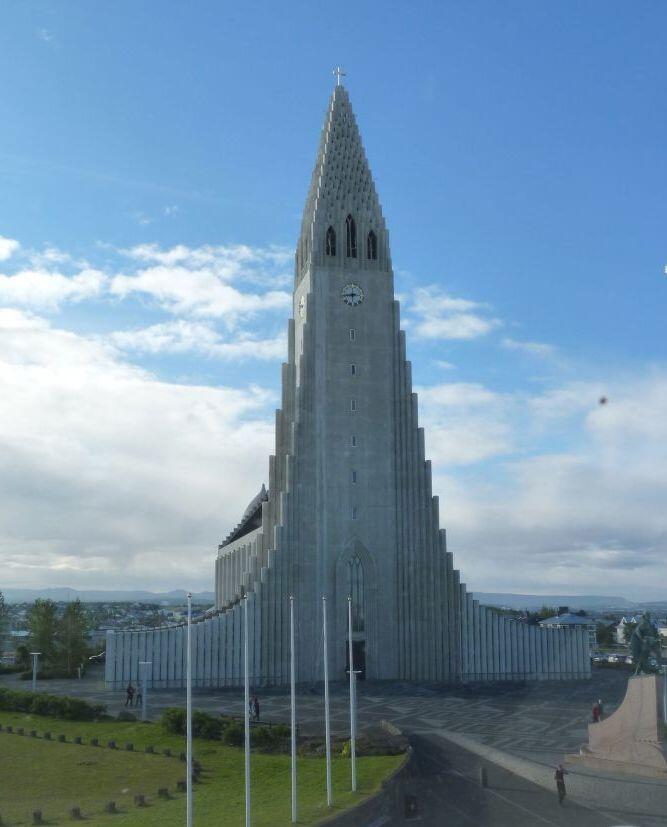
The Hallgrims Kirk in Reykjavik - Photo: ©Horst Milde
RUNNING INTO HISTORY – Reykjavik Marathon – By Eygló Svala Arnarsdóttir.
From humble beginnings, the Reykjavík Marathon has grown to become a major harvest festival for runners in Iceland and a hotspot for athletes from abroad. It’s funny to think that it actually started out as a tourism stunt. “At the travel agency Úrval, where I was working at the time, we were looking for ways to attract foreign tourists to the country,” reveals Knútur Óskarsson, one of the founders of the Reykjavík Marathon.
“Originally I tried to establish a Nordic ski marathon called Lava Loppet in 1981-82 but those plans went up in the air.”
One spring day in 1983 Óskarsson found himself on the streets of Gothenburg, Sweden. “The streets were closed and people were running. I wasn’t aware that the Gothenburg Half Marathon was taking place with several thousand people participating, among them famous athletes like Grete Waitz and Ingemar Johansson, a boxer, who was running for charity.”
The race gave Óskarsson the idea to establish something similar in Reykjavík. “I pitched it to my boss Steinn Lárusson and he said ‘let’s do it!’ We contacted the Icelandic Athletic Federation, Icelandair and Reykjavík City’s Sports and Recreation Council (ÍTR) for collaboration.” A few days passed, and then the race was on. The next step was executing the plan.
“In February 1984 I was at a travel fair in Berlin and contacted the organizers of the Berlin Marathon, which had been running for ten years and become world famous. Race director Horst Milde agreed to meet me. He told me what needed to be done, which I later repeated to my co-workers. Milde stressed the importance of good collaboration with a radio station and a newspaper,” recollects Óskarsson. Milde’s advice was much valued among the organizers of the Reykjavík Marathon and this year, at its 30th anniversary, he will attend the race as a guest of honour.
On August 24, 1984, the first Reykjavík Marathon kicked off with 281 runners onboard. “A road race was an absolute novelty in Iceland; only two other such races existed in the country at that time. We decided straight away that we would have three distances, a full and half marathon and a fun run, to have people get used to the idea and to attract the masses,” explains Óskarsson.
Among participants were around 90 foreigners. “Tom Gilligan of Marathon Tours in Boston arrived with a group of runners himself; he has sold trips to the race from the start.” The following year, more than 500 people registered to the race, of whom around 100 came from abroad.
Since then, the race has been in an almost constant growth, with registrations jumping from approximately 4,000 to 10,000 between 2005 and 2006. In 2012, there were close to 14,000 registrations with more than 1,600 foreign runners participating. Around 1,000 runners participated in the marathon and 2,000 in the half marathon, making both races less crowded than is generally the case in larger events.
“We are proud of the increase of female runners—the ratio between men and women is now almost equal. In 1984, 23 percent of participants were women but in 2012, they accounted for 53 percent of participants,” says Reykjavík Marathon executive director Frímann Ari Ferdinandsson. Today, the Reykjavík Marathon includes six distances, in addition to the marathon and half marathon, a relay race, 10k run, 3k fun run and a children’s run—it’s not just for competitive runners but is also a family event.
“There are many things included in the registration fee—which is among the lowest in Europe—such as a t-shirt, pasta party and admission to the city’s geothermal pools,” Ferdinandsson points out.
“It’s the biggest running festival in Iceland. I find it very special—I’ve participated from the start. I’ve watched it grow and always joyous a lot of fun,” says Martha Ernstdóttir of the Reykjavík Marathon, the only Icelandic female athlete to have run a marathon at the Olympics. She competed for Iceland at Sydney in 2000.
The Reykjavík Marathon, which is held the third weekend of August, is always a fixed event on her calendar. “There are now more people around the track and the atmosphere is starting to resemble what I’ve experienced at marathons abroad. But primarily it’s the masses of runners that make the race different from what it was originally. The increase in participants has been incredible and many foreign runners have joined in,” Ernstdóttir says of the race’s development.
Óskarsson explains that one of the reasons the race proved a success from the start was that already in 1984 the Reykjavík Marathon joined AIMS and thereby had to fulfil all directives and standards necessary to host an international marathon. “We have been conservative and only carried out changes after careful consideration,” says Knútur. These include acquiring Íslandsbanki bank as a title sponsor in 2005, which gave marketing a boost, which, in addition to the Lazy Town children’s run and the Reykjavík Marathon’s collaboration with charities, enabling participants to run for a good cause, explains the boom in registrations the following years.
Since 2003, the Reykjavík Marathon has been managed by the Reykjavík Sports Union. The company also organizes the Laugarvegur Ultra Marathon, a challenging 55k race that takes place in a colourful geothermal area in the southern highlands of Iceland, and the Suzuki Midnight Sun Run, a growing event that offers a half marathon, 10k and 5k races.
World famous runners who have participated in the Reykjavík Marathon include Stefano Baldini, Frank Shorter, Hugh Jones, the aforementioned Grete Waitz, Waldemar Cierpinski and Fred Lebow. “Foreign runners have been very positive towards the Reykjavík Marathon. Some return year after year, especially Germans, Canadians and Americans,” says Ágúst Þorsteinsson, who served as a Reykjavík Marathon race director for 10 years. “They praise the clean air and water. And at this time of year the temperature is usually around 10-14°C, which is ideal for running a marathon,” he adds of the Icelandic climate in late August.
“I’ll run the marathon for the 20th time this year—I never run a half marathon when a full marathon is an option,” says repeater Gísli Ragnarsson, who has also participated in marathons in Boston, London and around Iceland. “Reykjavík is my favourite. There’s a vibrant atmosphere and the race is well organized. Now there are more people cheering the runners on. It’s great to see how the interest in running has spread in Iceland, at first there were just a few eccentrics.
The atmosphere is especially lively with Culture Night taking place the same day,” Ragnarsson adds of an event that has been made correlate with the Reykjavík Marathon, the anniversary of Reykjavík. It’s a culture and family festival, which ends with a fireworks show in the evening.
The course of the Reykjavík Marathon has remained more or less the same since 2000. Until then the full marathon was two half marathon rounds. But the race has always begun and ended on Lækjargata in the heart of Reykjavík with a view of the City Hall and Reykjavík Pond, home to ducks and swans. The first part of the course runs through a residential area, which is followed by a section along the seaside with views of the open ocean, Reykjavík landmark mountain Esja, other scenic mountains and, in clear weather, Snæfellsjökull glacier in the distance.
Runners then enter the Laugardalur park, progress through the green and forested Elliðaárdalur valley along a salmon fishing river with small waterfalls, and Fossvogsdalur valley, which separates Reykjavík from its neighbouring town Kópavogur. The valley leads to the Fossvogur cove, where runners pass the thermal beach Nauthólsvík. They continue along the seaside, all the way to Grótta on Seltjarnarnes, with a view of a lighthouse and seabirds diving into the ocean. Back in the city, runners pass famous buildings such as Höfði, where the 1986 Reagan-Gorbachev summit, an important step towards ending the Cold War, took place, and the Harpa concert and conference centre, the latest landmark of Reykjavík’s cityscape.
“It’s friendlier, smaller and more rustic than marathons I’ve participated in abroad. It’s more comfortable, peaceful and not as stressful,” comments one of the foremost Icelandic athletes, marathon runner Kári Steinn Karlsson, the first Icelandic male athlete to compete in a marathon at the Olympics. He placed 42nd at the 2012 London Olympics. He has participated in the Reykjavík Marathon 13 times and holds the best time in the 10k run. “Foreign runners don’t necessarily register to achieve their best time. They come here for the views of the Esja, experience nature and tackle whatever the weather gods have in store for them. It’s part of the atmosphere not to know what to expect.”
Karlsson will not run a full marathon in Reykjavík this year because he’s preparing for the Berlin Marathon in September, “but I plan to run a half marathon, which will be good preparation,” he says. “It’s an important tradition for me to run at the Reykjavík Marathon every year.”
Eygló Svala Arnarsdóttir
Published in DISTANCE RUNNING – Issue 68 – 2013 Edition 3
31. Reykjavik Marathon: August 23, 2014
