 EN
EN
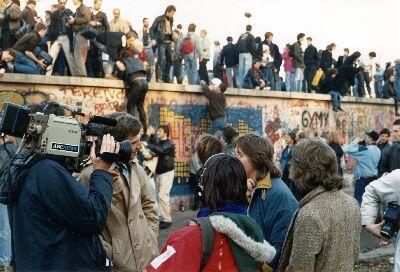
The Berlin-Wall on november 10, 1989 at the Brandenburg Gate ©Horst Milde
Mauerspechte (wall peckers) and exuberant runners – Manfred Steffny in SPIRIDON – “25 YEARS AFTER THE FALL OF THE WALL”
We are publishing a shortened version of an article on the fall of the Berlin Wall on November 9, 1989 from the trade magazine Spiridon, written by Manfred Steffny. The image of the course on the cover was a suggestion by the author, which was then printed in a different form.
Horst Milde
"The opening of the Berlin Wall on November 9, 1989 had an enormous effect on running in Germany. The enclave of Berlin became an international meeting point. The Berlin Marathon had 13,433 finishers in september 1989, a number that almost doubled the following year. What happened in November/December 1989 in and around Berlin was simply “Waaahnsinn!” – or “crazy” as is a common exclamation in both East and West.
Back then in the November edition of SPIRIDON, Werner Sonntag wrote: “We can finally say it out loud: Some of us have been participating in races in the GDR; up until the spring of 1989, when for the first time starting spots were made available for competitors from West Germany for the Rennsteiglauf event, such participation was illegal. We used to participate under false names.
East German runners would secure race numbers, which was not so simple, and they passed these race numbers on to a runner whom they often did not know personally.”
In return, runners from the East did not have to pay the fee to participate in West German races, which first came into play on November 12, 1989 at the 26. Berlin Cross-Country race around the Teufelsberg mountain in the Grunewald forest, where 35 East Berliners participated. In mid-November, the Sri Chinmoy marathon team organised a race along the Berlin Wall through Tiergarten Park, which drew many misty-eyed participants. During the friendship race, in which I participated, one heard the hammering of the “Mauerspechte” as they chiselled away pieces of the wall on the west side with their hammers and picks.
For some it was a private souvenir, others sold the bits of graffiti, while others hammered away their long pent-up anger with their hearts and souls.
In New York a week before the quasi fall of the Wall on November 9, we discussed the future of the Berlin- Marathon with Horst Milde, who as race director wanted to open the race to the East. Upon my return on November 8, I wrote Horst Milde: “Should the Berlin-Marathon in fact break through the wall and lead through East Berlin, I believe that it would rise to become the number one race in the world and interest from the sponsors would increase as well.”
Two days later, I wrote one more letter to Horst Milde and read it aloud in the evening to very supportive runners who were attending my running seminar that was going on in Neandertal.
Here is an excerpt: “Following the evening in which we Germans were the happiest people in the world (a quote by the Berlin mayor Walter Momper), I would like to mention two things:
1. Exemption from race fees for all GDR citizens, something that you [Milde] have done at the Berlin Marathon, should immediately become a regulation for the DLV (German Athletics Association);
2. Take advantage of this moment to turn the Berlin Marathon into a true marathon. Seize the opportunity; it’s now or never. There are historical moments in sports, too, that one must not let pass by. Demand everything now: “Unter den Linden” [main boulevard in East Berlin] and the finish, yes the finish, the Brandenburg Gate! …”
We then thought up a possible course and published it on the cover of the next edition of SPIRIDON 11/89 that came out on November 20 (see image).
At the time we wrote: “Of course the organiser cannot surge ahead on his own, but rather must conduct many discussions. As the head of the Berlin Marathon, Horst Milde has presented three maxims: – definitely through the Brandenburg Gate, – about a third of the course through East Berlin, – and the finish as usual on Kurfürstendamm.”
With this SPIRIDON magazine, Horst Milde went from government agency to agency. Much of the idea was realised and the envisioned onslaught of over 20,000 finishers was even surpassed. Milde, who was a tough cookie as a negotiator, even threatening to resign or cancel the event when too many stones were placed in his path, prevailed in implementing his and our concept: three days before the German reunification, 25,000 marathon runners ran through East- and West-Berlin and through the Brandenburg Gate – then at about the 2 km mark.
At the 2009 Berlin Marathon – 20 years later – no trace of the Wall could be seen, thus the motto: “20 Years after the Fall of the Wall – Running without Borders 1989-2009.”
At the turn of the year 1989/1990, a great celebration took place in which everyone was drunk without a drop of alcohol. Many runners like myself participated in three New Year’s races in Berlin: first in Plänterwald, then with the Trabi [the East German car] to Charlottenburg and finally on the morning of January 1, 1990, the “First All-Berlin New Year’s Run”, a non-competitive six-mile run that passed through the Brandenburg Gate, which was organised by SCC with Horst Milde and the organiser of the former Berlin Peace Run, Stefan Senkel.
There was no timekeeping, and rather than a participation fee, donations were collected for UNICEF. Over 20,000 runners participated in this unique event. The run was a mix of carnival and revolution, with the mayors of both halves of the city participating.
At the time, I wrote an article in SPIRIDON 1/90 entitled: “The most wonderful New Year’s run of all times”: “Nothing was at stake and everything was at stake. The first all-Berlin New Year’s Run became an immense demonstration of the people at a jogging pace. The concept of crossing the Berlin Wall and passing through the Brandenburg Gate for the first time legally and without border documents was so fascinating that the 20,000 prepared race numbers disappeared like hotcakes.
Thousands joined in without race numbers, and no one tried to stop them.”
Manfred Steffny in SPIRIDON 12/1989
