 EN
EN
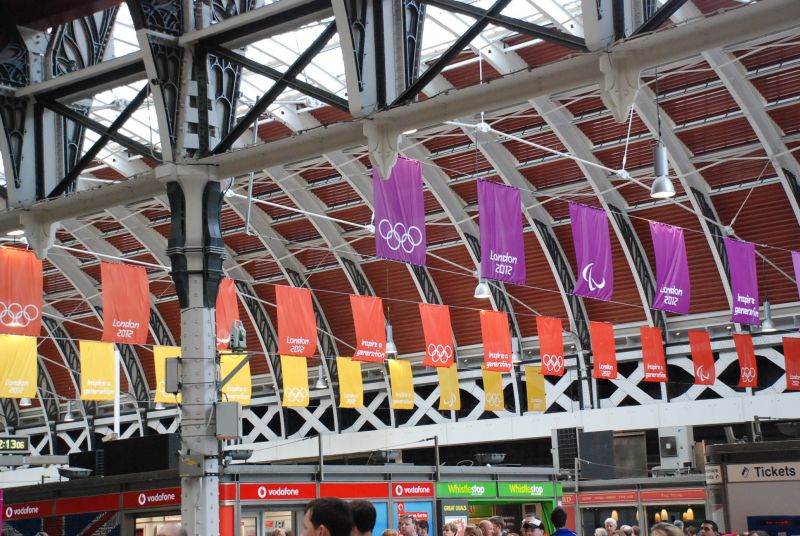
LONDON 2012 - Success of Cultural Olympiad Reinforces Britain’s Reputation as a World Leader in Culture ©Horst Milde
LONDON 2012 – Success of Cultural Olympiad Reinforces Britain’s Reputation as a World Leader in Culture
Established as a four year, UK-wide programme, the 2012 Cultural Olympiad was the largest cultural programme of any Olympic and Paralympic Games with a geographical scale unmatched by any previous UK cultural festival. The finale of the Cultural Olympiad was the London 2012 Festival, a 12-week nationwide celebration running from 21 June – 9 September 2012, the largest UK-wide festival ever staged.
The key findings of the report are:
Scale of Cultural Olympiad
The volume of public engagement across the Cultural Olympiad was vast, with audiences, participants and volunteers estimated at 43.4 million, and an additional 204.4 million reached through broadcasts and online viewings.
177,717 performances and events took place over the course of the Cultural Olympiad of which 33,631 (29%) were concentrated in the 12-week London 2012 Festival period.
Artistic Ambition and Innovation
The UK-wide celebration brought together more than 40,000 artists from across the world in a programme of events from Shetland to Bexhill-on-Sea and Belfast to Aldeburgh, showcasing the UK as a world-leading hub of creativity and the creative industries.
Highlights of the programme included the world’s largest Shakespeare Festival; Pina Bausch’s World Cities programme; major exhibitions of
works by David Hockney, Damien Hirst, Lucian Freud, Yoko Ono and Tracey Emin; Gustavo Dudamel’s open-air Big Concert in Rapploch; Daniel Barenboim's West Eastern Divan Orchestra performing a Beethoven/Boulez cycle; a pop up programme which included Mark Rylance’s sonnets on the London Underground and Elizabeth Streb's One Extraordinary Day performance Piccadilly Circus Circus which closed Piccadilly Circus for the first time since VE Day transforming it into a free family circus for a day; poetry on the beach in Peace Camp; pop up fashion hats on London statues; the world premiere of Stockhausen’s Mittwoch aus Licht; 3 British premieres by Robert Wilson including Einstein on the Beach; Big Dance across the country; a major African focus with We Face Forward and Africa Express; Richard Long’s specially commissioned artwork on the Olympic cycle path on Boxhill; and Unlimited – the largest ever commission of art by disabled and deaf artists during the Paralympic Games.
Over 5,000 special commissions offered an exceptional opportunity to invite world- class artists create works of a scale and ambition not generally possible. Artists were invited to create a work that lived up to the challenge of being “once in a lifetime” either in scale or innovation or both.
Cultural Tourism
The Cultural Olympiad and London 2012 Festival helped enhance the perception of Britain abroad.
The UK’s overall rating in the Country Brand Index for Culture went up one place from fifth to fourth after the Games, reflecting significant rises in the rating of the UK’s sporting excellence, culture, natural beauty and tourism. There is opportunity to build on this positive profile, particularly in the context of Visit Britain’s work, the GREAT campaign, and the new partnership between Arts Council England and VisitEngland.
In a survey by Visit Britain, 74 per cent of tourists agreed that coverage of the Games had made them aware of the UK’s diverse cultural experiences and events.
Programming took place across many of the most recognizable outdoor tourist attractions in the UK from Stonehenge to Hadrian’s Wall. Heritage sites of outstanding natural beauty including beaches were also used.
New Audiences and Public Engagement
The Cultural Olympiad and London 2012 Festival placed great emphasis on free activities and attendances to ensure that everyone would be able to participate and that people were not deterred by price barriers.
The evaluation shows that free tickets enabled new audiences, especially young people, to attend festival events and audience surveys suggest that they felt positive about the experience and are therefore willing to continue to attend cultural events.
Free activity cut across all strands of programming and resulted in 15.4 million free audiences or participants within the Festival, and an additional 23 million in the broader Cultural Olympiad.
40 per cent of projects targeted children or young people, a majority which were led by young people themselves as artists or producers such as Tate Movie, Film Nation Shorts, Big Dance and A Hansel of Film.
Taking cultural events out of traditional venues enabled non-traditional arts audiences to have access to a wide range of events staged in parks, streets, squares and shopping centres.
Audience feedback was very positive, with almost 80 per cent saying that the event they attended exceeded their expectations, and the range of data indicates that the Games motivated people to engage in culture.
New Partnerships
62% of the projects indicated that they worked with new partners and 50% indicated that the Cultural Olympiad motivated them to work with partners they would not normally work with. 29% of projects worked with partners from a different art form or other sectors. Across the programme, all sectors, from culture and the arts in their broader sense, to heritage, education, sport and health were involved.
Across the programme, 19 per cent of projects indicated that they established new partnerships with creative organisations, and 14 per cent of projects reported forming new partnerships with business.
International co-commissions and partnerships to create commissions and projects for the London 2012 Festival involved cultural and creative industry partners in every continent of the world.
Impact on Future Olympic and Paralympic Games
Undoubtedly one of the most important legacies from the London 2012 Cultural Olympiad will be the programme Unlimited, inspired by the Paralympic Games, which created the largest commissioning fund ever for disabled and Deaf artists.
The theme of Olympic Truce was also an inspiration for many artists and arts organisations and was the starting point for some of the most important commissions, from Mittwoch aus Licht and Peace Camp to the partnership with Peace One Day and artist Oscar Munoz’s work in Belfast.
The Cultural Olympiad – Facts and Figures
Size and Scale
· £126.6m budget across the four year Cultural Olympiad, of which 89% goes to programming
· 177,717 activities across performances (22%); event/exhibition days (18%); sessions for education, training or taking part (52%); and other activity (7%), the latter including dedicated broadcasts and online commissions. 33,631 activities within the London 2012 Festival alone
· 40,464 artists of which 6,160 are emerging artists and 806 are Deaf or Disabled artists. 25,000 artists in the London 2012 Festival alone
· Artist representation from all 204 competing Olympic nations
· 5,370 new artistic works or commissions emerging out of half of all Cultural Olympiad projects. 2,127 of these emerge out of London 2012 Festival projects
· 10,940 new partnerships formed with cultural organisations, businesses, educational organisations, local authorities and sport organisations across the Cultural Olympiad
Public Impact
· 43.4 million public engagement experiences, including 37.4m attendances or visits, and 5.9m participants. This total includes
· More than 45,597 volunteers
· 38.5 million free public engagement experiences. 15.4m within the London 2012 Festival
· Estimates of 1.6m domestic tourist visits across the Cultural Olympiad
· Estimates of 126,000 international tourist visits at the London 2012 Festival in the period July-September 2012
· 204.4 million broadcast and online views and hits across the Cultural Olympiad. 139m for the London 2012 Festival alone
· 42,000 Twitter account followers for the London 2012 Festival with a 84% positive sentiment
· By September 2012, 29% of the UK population was aware of the Cultural Olympiad and Festival; this went up to over 40% awareness in London
· 66% of London 2012 Festival audiences agree that being part of the Festival in the context of the Games was a “once-in-a-lifetime” experience
· 80% of London 2012 Festival audiences indicate that the event attended exceeded their expectations
Impact on the Culture Sector
· 54% of projects indicate they would not have taken place without the Cultural Olympiad
· 52% of projects indicate that they expect to continue beyond 2012 in a similar form
· 61% of projects indicate that they expect to sustain new partnerships formed beyond 2012
· 67% of projects believe they have gained greater national profile and felt part of a bigger national celebration thanks to being part of the Cultural Olympiad
Television and Press impact
· Over 165 hours of BBC coverage of London 2012 Festival programming (excluding news) in 2012
· 1,574 UK national and 4,126 regional clippings mention the Cultural Olympiad or London 2012 Festival between 2003 (early London 2012 bid mention) and 11 September 2012(Games aftermath). An estimated 3,876 stories refer only to the Cultural Olympiad, 1,311 refer only to the London 2012 Festival, and 513 to both
· 364 international press clippings from 38 countries cover the London 2012 Festival between July and September 2012
· 45% of UK press national stories and 75% of regional are positive in 2012. Only of 8% national stories and 1.7% of regional stories are negative
· 15.5% of stories on the Cultural Olympiad are a news item; 8% appear within the sport pages
· By the end of 2012, art critics produce 42 UK articles choosing Cultural Olympiad activity as their top highlight or cultural pick of 2012
Online media impact
· Over 2 million views of the London 2012 Festival website between November 2011 and September 2012, with an average monthly unique visitors of 200,000
· 1,200 tweets sent out by @London2012Fest during the London 2012 Festival period, resulting in over 20,000 re-tweets
· 4,000 engaged followers of the London 2012 Festival twitter account
· 37,600 ‘likes’ of the London 2012 Festival facebook page
· 66,000 downloads of a digital bell on occasion of Martin Creed All the Bells project the morning of the Olympic Games Opening Ceremony
Quotes
Maria Miller MP, Secretary of State for Culture, Media and Sport:
“The Cultural Olympiad and the London 2012 Festival were a huge success and provided a platform for us to showcase Britain to the world. With over 43 million visitors, participants, audiences and volunteers it inspired people across the country attracting new audiences, new commissions, new productions and premieres, new partnerships and new ways of working.
We are committed to ensuring this level of success continues and I am delighted that the cultural sector along with Government is already looking at ways to maximise the legacy of the Cultural Olympiad and enhance our already world class cultural reputation.”
Tony Hall, Chair of the Cultural Olympiad Board:
Over 40 million people took part in the Cultural Olympiad and London 2012 Festival in over 150,000 events all over the country. The publication of the
evaluation today is a proud moment for all involved and I must pay tribute
to the vision and creativity of the LOCOG culture team and our
wonderful partners across the UK and internationally.”
Ruth Mackenzie, Director, London 2012 Festival:
“Huge thanks to all the partners and artists from around the world who helped London 2012 show the world innovative, excellent, ambitious artistic work at all scales, new models of festival work to encourage new audiences and participants to join in for free, and made a brilliant case for the UK's world class culture and creative industries to global and local audiences."
Adriana Rattes, Secretary of State for Culture, Rio de Janeiro:
“Working with the London 2012 culture team was the real opportunity to
learn how to create and conduct a very successful cultural festival with
an attentive look towards what is groundbreaking and out of the ordinary,
as well as towards the legacy that the event would leave to the city.”
The NBI is an annual study assessing the views of people from 20 countries around the world on 50 nations, including the UK. The UK's Ranking is always out of 50.
In 2012, Data was collected in July 2012 (pre Games) and then in Oct/ Nov 2012 (post Games).
Key Festival Highlights
· London 2012 celebrated the global appeal of William Shakespeare with the World Shakespeare Festival – an unprecedented collaboration of leading UK and international arts organisations, produced by the Royal Shakespeare Company and with Globe to Globe, a major international programme produced by Shakespeare’s Globe. Performances and events were scheduled in more than 25 venues across the UK (23 April – November 2012).
· Heatherwick Studio: Designing the Extraordinary, the first major solo exhibition from one of the most inventive and experimental British design studios practising today, also designers of the 2012 Olympic Cauldron, was presented by the V&A as part of a season of events celebrating British design (31 May – 30 September 2012).
· The first major survey of Damien Hirst’s work ever held in the UK, which brought together over 70 of the artist’s works including For the Love of God and other seminal pieces at Tate Modern (4 April – 9 September 2012).
· An important exhibition of works by Tracey Emin, presented at the award-winning Turner Contemporary in her hometown, Margate. She Lay Down Deep Beneath The Sea contained a mixture of new and existing works exploring the themes of love, sex and romanticism (26 May – 23 September 2012).
· The Serpentine Gallery Pavilion 2012 was unveiled, created by Herzog & de Meuron and Ai Weiwei, the design team responsible for the celebrated Beijing National Stadium that was built for the 2008 Olympic Games. (1 June-14 October 2012).
· To mark the London 2012 Festival opening and the arrival of the London 2012 Olympic Torch Relay to the shores of the largest natural lake in England, French street arts company, Les Commandos Percu brought a new spectacular outdoor show, On the NightShift, to Lake Windermere in Cumbria (21 June 2012).
· Opening the London 2012 Festival on 21 June in Scotland, The Big Concert featured a spectacular open-air performance with Venezuelan superstar conductor, Gustavo Dudamel and the Simón Bolívar Symphony Orchestra of Venezuela set against the backdrop of Scotland’s Stirling Castle. The 200-strong orchestra was joined by aspiring young local musicians and the concert was broadcast live on BBC TV. (21 June 2012).
· Peace One Day – Global Truce Countdown 2012 was Northern Ireland’s major opening concert for the Festival, with performances by Pixie Lott, Imelda May, Newton Faulkner, Guillemots and Wonder Villains. The concert was produced by Peace One Day founder Jeremy Gilley and ambassador Jude Law (21 June 2012).
· Edward Gardner conducted the UK premiere of Weltethos, British composer Jonathan Harvey’s epic choral work based on texts from six of the world’s largest religions. The work was performed by The City of Birmingham Symphony Orchestra, CBSO Chorus, Youth Chorus and Children's Chorus at Birmingham’s Symphony Hall (21 June 2012).
· Yoko Ono’s IMAGINE PEACE art installation – a worldwide initiative of anti-violence, featuring the IMAGINE PEACE message translated into 24 world languages – was screened at London 2012 Live Sites throughout the United Kingdom on 21 June 2012. A major exhibition of the artist’s work was also on show at the Serpentine Gallery as part of the London 2012 Festival (19 June – 9 September 2012)
· Australian comedian, composer and musician Tim Minchin brought his own unique blend of musical comedy to The Eden Project (23 June 2012).
· BBC Radio 1’s Hackney Weekend, a free celebration of live music that featured six stages and more than 100 international artists including Jay-Z, Rihanna, Florence + the Machine, and Jessie J, and DJ David Guetta (23 – 24 June 2012).
· The London premiere of Damon Albarn’s Dr. Dee, a new operatic work from the Blur and Gorillaz front man with opera director Rufus Norris, was held at the London Coliseum (25 June – 7 July 2012).
· The world premieres at Edinburgh Film Festival of four films, specially commissioned for the London 2012 Festival, that showcased great UK filmmaking talent, including Mike Leigh, Lynne Ramsay, Asif Kapadia, and STREETDANCE directing duo Max and Dania, co-commissioned by London 2012 Festival with BBC Films and Film 4 (25 June 2012, followed by screenings at cinemas nationwide).
· Land of Giants, Northern Ireland’s largest outdoor arts event, transformed Belfast’s Titanic Quarter with acrobatics, aerial dance, carnival, circus, music, multi-media and pyrotechnics (30 June 2012).
· A group of comedians travelled the UK’s waterways on a barge from London to Edinburgh on a comedy relay with a series of impromptu gigs en route, entitled Tales of the Riverbank Comedy Barge (28 June – 12 August 2012).
· Britain Creates 2012: Fashion & Art Collusion saw a series of collaborations between top designers and artists inspired by Olympic and Paralympic values (6 – 29 July 2012).
· A once-in-a-lifetime transformation of a celebrated British Heritage site, Fire Garden at Stonehenge, was created by French outdoor wizards, Compagnie Carabosse (10 July – 12 July 2012).
· One Extraordinary Day: Streb Action by award-winning American choreographer Elizabeth Streb, featured daredevil feats of extreme athleticism across iconic London sites (15 July 2012).
· Big Street Dance Day saw celebrations of dance in public spaces in Beijing, London and Rio and across the UK (14 July 2012).
· A spectacular weekend of free music representing all 204 participating Olympic and Paralympic nations, at landmark venues along the River Thames for BT River of Music (21 – 22 July 2012).
· A series of coastal installations exploring love poetry designed to be visited between dusk and dawn, entitled Peace Camp, were unveiled by renowned theatre director Deborah Warner and actor Fiona Shaw (19 – 22 July 2012).
· Tino Sehgal’s new installation, These Associations, explored human interactivity, intimacy and a critical engagement with one’s environment in Tate Modern’s Turbine Hall (24 July – 28 October 2012).
· Playing the Games was a unique celebration of cultural and sporting talent – emerging and established – which featured comedians, musicians, playwrights and Olympians at the Criterion Theatre (26 July – 12 August 2012).
· Work No. 1197: All the bells in a country rung as quickly and as loudly as possible for three minutes, by Turner Prize-winning artist and musician Martin Creed, was performed by people across the UK at 8AM to celebrate the first day of the London 2012 Olympic and Paralympic Games (27July 2012).
· Daniel Barenboim conducted the West-Eastern Divan Orchestra for a complete Beethoven symphony cycle culminating on 27 July, the opening night of the Games, with a performance of Beethoven 9 as part of BBC Proms 2012 (20 – 27 July 2012).
· BP and the Royal Opera House joined forces with the Olympic Museum to create The Olympic Journey: The Story of the Games, a free exhibition telling the Olympic story through the endeavours of ancient and modern Olympians (28 July – 12 August 2012).
· Oscar-winners Wallace & Gromit made their Proms debut with Wallace’s Proms commission My Concerto in Ee, Lad (29 July 2012).
· BBC Radio 1’s Scott Mills and Nick Grimshaw returned to the Edinburgh Festival Fringe with their Fun and Filth Cabaret show (13 – 17 August 2012).
· Edinburgh International Festival saw an unforgettable three weeks of the very best in international opera, music, theatre and dance, with select programmes forming part of London 2012 Festival (9 August – 2 September 2012).
· NVA’s Speed of Light, saw the city’s dramatic landmark Arthur’s Seat brought to life by runners in luminous suits animating the hillside with trails of patterned light (9 August – 1 September 2012).
· Lakeside performances of Benjamin Britten’s much-loved children’s opera, Noye’s Fludde, were presented by NI Opera against the backdrop of Belfast Zoo (10 – 18 August 2012).
· Hans Peter Kuhn’s innovative artwork Flags transformed the landscape of the Giant’s Causeway (20 August – 4 November 2012).
· The much-anticipated world-premiere of Stockhausen’s masterpiece, Mittwoch aus Licht, was a five-hour long sonic extravaganza featuring a string quartet streamed live from four flying helicopters flying above Birmingham (22 – 25 August 2012). This was the first time that all six parts of Stockhausen’s opera has been staged together.
· Paralympic Flame Festivals in London, Greater Belfast, Edinburgh and Cardiff featured Paralympic sport demonstrations, live stage shows and lantern processions (25 – 28 August 2012).
· New York collective YesYesNo’s art installation Connecting Light: Hadrian’s Wall, spanned the 73-mile long Roman frontier (31 August – 1 September 2012).
· The Africa Express brought together artists from Africa, the UK, the US and mainland Europe in a UK-wide tour by train
· Unlimited at Southbank Centre, a festival of the 29 Unlimited commissions in different art forms, shone the spotlight on the artistic vision and originality of deaf and disabled artists (31 August – 9 September 2012).
· Branches: The Nature of Crisis, a new site-specific show by Berlin theatre star Constanza Macras, was staged in the Rheidol Forest of North Wales (5 – 15 September 2012).
· The culmination of BBC Proms 2012, Last Night of the Proms at the Royal Albert Hall, was accompanied by satellite BBC Proms in the Park events across the UK (8 September 2012).
The first Busk on the Usk, a free urban music event in Newport, co-commissioned by the Welsh Arts Council, London 2012 Festival & Green Man Festival.
· Glasgow’s famous Barrowland Ballroom hosted a landmark dance event by Scotland’s most celebrated contemporary choreographer, Michael Clark (8 – 9 September 2012).
· More than 500 bandstands and outdoor performance spaces across the UK simultaneously came alive with music, playing Coldplay’s Viva La Vida as part of Bandstand Marathon (9September 2012).
LONDON 2012
