 EN
EN
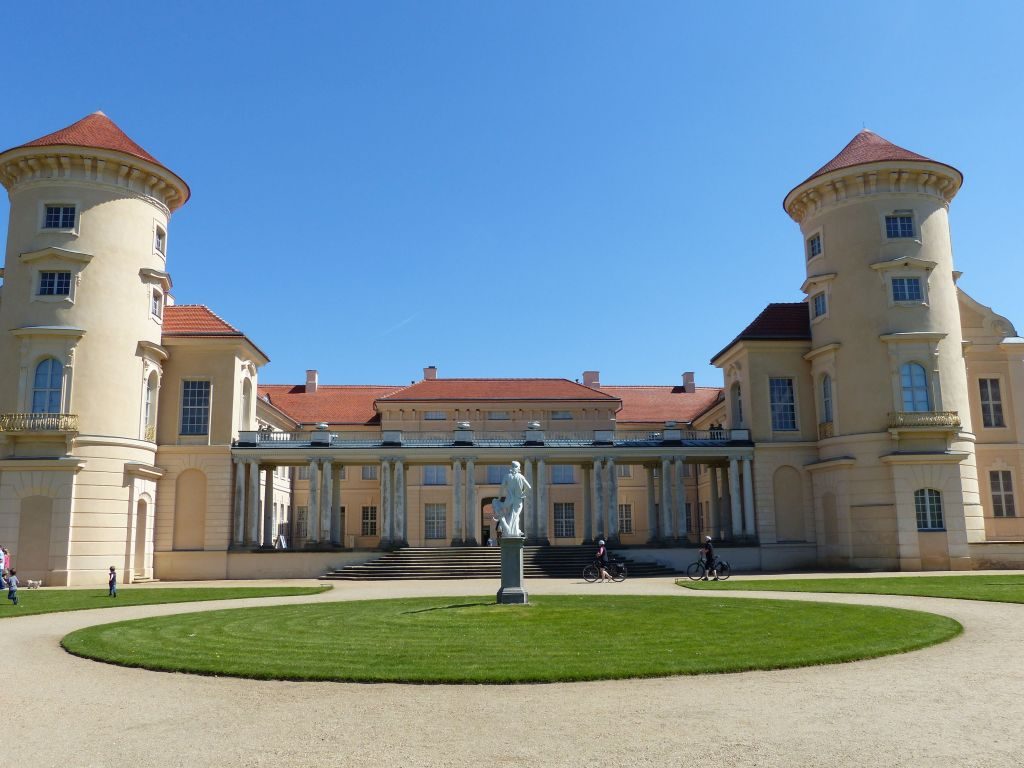
Schloß Rheinsberg - 9th edition of “Communities and Crisis – Inclusive Development through Sport“ in Rheinsberg, Germany, from 30th October until 5th November 2016. ©Horst Milde
ICSSPE/CIEPSS – How can Physical Activity Help to Include Refugees? 9th edition of “Communities and Crisis – Inclusive Development through Sport“ in Rheinsberg, Germany, from 30th October until 5th November 2016.
How can Physical Activity Help to Include Refugees? “Communities and Crisis” Seminar will try to Find Answers
 ICSSPE will host the 9th edition of “Communities and Crisis – Inclusive Development through Sport“ in Rheinsberg, Germany, from 30th October until 5th November 2016.
“Communities and Crisis” provides participants with unique insights into the use of sport and physical activity for inclusive community building, particularly in areas recently affected by crises. These crises include natural disasters such as earthquakes, floods or tornadoes, as well as human-made crises like civil wars and vulnerable communities. But this year a special focus will be on refugees, their situation within the European countries and potential psycho-social support through physical activity programmes.
Sport, play and physical activity are integral parts to a community building process. Careful design and implementation of such programmes under consideration of cultural diversity, gender and inclusion of all age groups are critical to ensuring positive development and avoid potentially harmful psychological effects. Through this symposium, participants learn to use sport as positive means of physiological and psychological rehabilitation, both through practical, hands-on workshops as well as through theoretical learning sessions. It emphasises the importance of cultural sensitivity and the implementation of appropriate monitoring and evaluation techniques.
The seminar is set to take place at HausRheinsberg, Germany´s first hotel specially designed for patrons with disabilities. The hotel provides an ideal setting to conduct the seminar modules, as well as the opportunity to get to know each other and engage in leisure activities. This includes conference services, a modern sports facility, as well as a swimming pool, sauna, fitness room, and fireplace lounge. The hotel restaurant offers specialties of the region as well as international delicacies. Additional information about HausRheinsberg, including directions, may be obtained at www.hausrheinsberg.de/eng.
Registration is open now through the ICSSPE Website.
Through the generous financial support of the German Federal Ministry of the Interior and the Fürst Donnersmarck-Foundation, ICSSPE is very pleased to be able to again offer Bursaries for participants to participate in the Seminar (please note that ICSSPE cannot cover travel or visa costs). To apply for one of the Bursaries, please provide the following documents after registration has been opened:
- Letter of intent (1 page);
- CV;
- Letter of recommendation by senior colleague or professor;
- Completed registration form.
Scholarship recipients will be asked to contribute to ICSSPE’s social media coverage during the event.
To apply for a scholarship, kindly send your application to Katrin Koenen at kkoenen@icsspe.org before 18th July 2016.
To register please click here and download the registration form.
To take a look at the draft programme, please follow this link.
The Olympics and Paralympics: Who Takes the Prize? ICSSPE Bulletin No 70 online!
 Issue No. 70 of ICSSPE’s Bulletin provides a Special Feature called “The Olympics and Paralympics in Brazil: Who Takes the Prize?”
The section contains a collection of scientific articles as well as selected journalistic works scrutinizing the situation in Rio de Janeiro around the Olympic and Paralympic Games. Through this collection, compiled and reviewed by Jens-Sejer Andersen from Play the Game and Prof. Dr Katia Rubio, Universidade de São Paulo, Brazil, the editors hope to offer useful contributions, not only for the time before and during the Olympics, but also for the years to come when it is time to identify the cultural, sporting, financial, social and political legacies of the games for Brazil and for world sport.
Please visit the ICSSPE Member's Area on the ICSSPE website (www.icsspe.org) and enter your password to access issue No. 70. If you require the password or need to renew your membership, or – as a non-member – would like to buy the Bulletin, please contact the ICSSPE Office, ablume@icsspe.org, for further details.
Ancient Concept of Sport in Modern Perspective – By S.H. Deshpande
 Sport is a comprehensive term used commonly at different occasions with different shades of meaning e.g. competitive sport, traditional sport, children’s sport, aqua sport, aero sport, adventure sport, winter sport.
A concept of the term ‘sport’ can be formed on the basis of specific characteristics that are common in all these activities.
A critical observation of all these sports reveal that there are three major characteristics found common in all types of sports. They are: 1. Enjoyability; 2. Volunteerism; and 3. Social Acceptability.
Enjoyability: All sportive activities are enjoyable. Participants participate in sport voluntarily because it gives them pleasure. Similarly, millions of people witness matches in stadia or through electronic media. Why? Because of the inherent principle of pleasure present in it. Sport may be an individual or a group activity, but remains always enjoyable. So, while formulating the concept of sport, the principle of enjoyability is considered a priority.
Voluntarism: Participation in sport is always a voluntary move. The mind of a child is prepared for play. So, this voluntarism must be nurtured. There cannot be acts of compulsion in it.
Social acceptability: Any activity brought under the banner of ‘Sport” must have social acceptability. Every society has its own culture and socially acceptable practices. Activities going against these conventional practices cannot be accepted by the society as sportive activity.
There is an ancient word: “Krida”.
In view of these three parameters required to be considered while defining and formulating the concept of the term ‘Sport’ it is attempted to project the term “Krida”, which is a Sanskrit word equivalent to the term ‘sport’. Sanskrit is one of the oldest languages developed in India, and most of the ancient literature and texts are in this language. Ancient Vedic literature dates back to at least 5,000 years BC. It is in these texts that the term Krida is found and profusely used to connote the meaning of Sport.
Krida is defined as follows: The physical activities in which people participate and which delight them. The broader sense of the term includes all recreational activities in which one gets pleasure in participation. S`is`u krida is referred to as child sport. Adult play is based on politico-social needs and play activities of cultural significance; Raas Krida is a dancing form of sport, Jala-Krida is water sport, Kanduka Krida is ball sport; S’ailadhirohan krida means rock climbing sport; As’wa Kanduka Krida means Horse Polo sport.
Whatever is the basis of sport, the eternal principle of enjoyment remains the same. The concept formed about sport clearly indicated an inclination towards deriving recreation, fun, enjoyment and pleasure through sporting activity. The term ‘physical exercise’ was separated from the term sport. Exercise in Sanskrit is called ‘Vyayam’. It is aimed at building strength and fitness. A separate chapter is written on the term ‘Vyayam’ in ancient medical texts. An element of enjoyment has little significance in this term.
Pure Joy or Anand: Apart from material pleasure, krida is also viewed in terms of spiritualism. The joy or Anand that one derives from voluntary participation in sport. According to the ancient theory of joy or happiness, there is no distinction of kind between physical good and spiritual good, the two are commensurable in terms of each other. Physical good is itself an aspect of ‘bliss’. The physical bliss, which is the first step for achieving spiritual bliss, is obtainable through the medium of sport – the bliss that is non-polluted, and perfectly pure should be the output of sport. For achieving such a pure bliss sport which is free from competitions, commercialism and brutality should also be of a different type.
Sport in which one gets completely engrossed, sport which is of individual type, non-competitive and that makes individuals forget everything around themselves. In this theory of joy, though the emphasis is on ‘Krida’ or sport, equally important is the body or S’arira that has to be swift, firm and strong. Such a type of body is obviously possible only through sport and physical education.
The principles of voluntarism and social acceptability are properly safeguarded as they are inherent in this philosophy. Sport was viewed by ancient Indians from a very different perspective. Not frustration, but pleasure, not hatred, but love, no competition, but cooperation, not materialism, but spiritualism, not commercialism, but amateurism, etc. are the inner characteristics of ‘sport’.
When can we have such type of sport possessing these characteristics available to our younger generation?
A Special feature on ‘Exercise and Science in Ancient Times’ will be published within the October 2016 Bulletin. It will be edited by Suresh Harir Deshpande, who has also written this opinion piece for the ICSSPE News.
Members are welcome to submit their articles, stories and opinion pieces for inclusion in either the ICSSPE Bulletin or the ICSSPE News.
The State of Physical Activity in Europe – A Next Step in the PASS Project
 What are the benefits of Physical Activity for society? And what policy and practice exist in Europe to promote Physical Activity?
Some answers to these questions were given by introducing the mid-term results of the PASS project during a workshop in Brussels, Belgium on 23rd and 24th May 2016. Sport and Citizenship, ICSSPE and the PASS project partners presented the draft of a 4-page leaflet, as well as a 12-page brochure, summarizing the findings of the narrative review on the state of physical activity in Europe, carried out by ICSSPE.
Using the new marketing tools, the members will now present the results of the review at several occasions within the EU Parliament and at national levels within the countries represented in the Consortium.
For further information please visit: https://sportetcitoyennete.com/pass or contact Katrin Koenen (kkoenen@icsspe.org) or Richard Bailey (rbailey@icsspe.org) at the ICSSPE Office.
Vacancies in Academia – Ireland and United States
 Dublin City University (DCU) Institute of Education (IRE) announces a vacancy for a position as Lecturer in Education/Physical Education. Closing date for applications is 24th June, 2016.
Further information is available from https://www.dcu.ie/hr/vacancies/current.shtml.
West Virginia University (USA) College of Physical Activity and Sport Sciences (CPASS) invites applications for a Teaching Assistant Professor in Athletic Coaching Education with an emphasis in Kinesiology.
Review of Applications begins on 24th June, 2016. More information can be found here: https://employmentservices.hr.wvu.edu/wvu_jobs.
The United States Sports Academy Seeks Doctoral Teaching Assistants.
For more information on the Teaching Graduate Assistantships, please download the document or visit the website at www.ussa.edu.

ICSSPE/CIEPSS
Hanns-Braun-Strasse
Friesenhaus II
14053 Berlin
Germany
Tel:+ 49-30-36418850
Fax:+ 49-30-8056386
E-mail:icsspe@icsspe.org
German Road Races e.V. (GRR) auf facebook:
https://de-de.facebook.com/germanroadraces
German Road Races e.V. (GRR) auf twitter:
https://twitter.com/germanroadraces
