 EN
EN
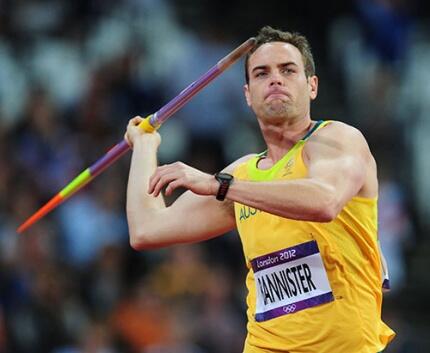
Bannister receives 20-month ban ©Athletics Australia
Athletics Australia – News – Bannister receives 20-month ban
Athletics Australia confirms that javelin thrower Jarrod Bannister been handed a 20-month period of ineligibility by the Court of Arbitration for Sport (CAS) for breaching article 6.4 of the Athletics Australia Anti-Doping Policy.
Bannister was charged by the Australian Sports Anti-Doping Authority (ASADA) for an offence under article 6.4 of the Athletics Australia Anti-Doping Policy concerning his availability for out-of-competition testing.
Bannister subsequently admitted to an Athlete Whereabouts Violation after missing out-of-competition testing on three occasions within an 18-month period. The CAS found however that with regard to the third of those missed tests there was no deliberate attempt by Bannister to avoid it, and subsequently determined that a ban shorter than the maximum possible sanction of two years was appropriate.
The CAS has determined that Bannister’s suspension should run from 19 June 2013 through to Midnight on 18 February 2015.
Athletics Australia Chief Executive Officer Dallas O’Brien said that Bannister’s ban was disappointing and highlighted the need for athletes to ensure strict adherence to their obligations under the WADA code.
“Athletics Australia is a signatory to the WADA code because we are committed to ensuring that those athletes who breach our anti-doping policy are dealt with in the manner appropriate to the circumstances of their case and any violation with which they should be charged,” said O’Brien. “For that reason it’s vitally important that all Australian athletes understand the range of obligations they have under the WADA code and strictly adhere to them. That includes ensuring that the details of their whereabouts are always updated so that out of competition testing can be conducted by the IAAF, ASADA or WADA.
“Alongside their counterparts in a small number of other Olympic sports, our high-end participants are particularly obligated to be meticulous about their compliance with the whereabouts aspects of the sport’s policies – especially given the frequency of out-of-competition testing through the extensive programs of ASADA, WADA and the IAAF which may make them more likely to be accountable in this area than athletes in other sports.
“We are disappointed that Jarrod did not meet his obligations as one of our top performing athletes and this case demonstrates the need for all athletes to be diligent and responsible,” O’Brien added.
“Part of this is that it is the individual athlete’s responsibility to notify the World Anti-Doping Agency of all international travel arrangements and precise accommodation arrangements. We acknowledge this can be challenging once the athlete is already overseas and perhaps we need to look at how we can do a little more to assist the athletes in those circumstances to fulfil their requirements.
“Athletics Australia will reinforce to its athletes the message that this decision brings and at the same time provide additional education and assistance in order to maximise compliance with the sport’s strict and wide ranging anti-doping policy.”
Athletics Australia – News
