 EN
EN
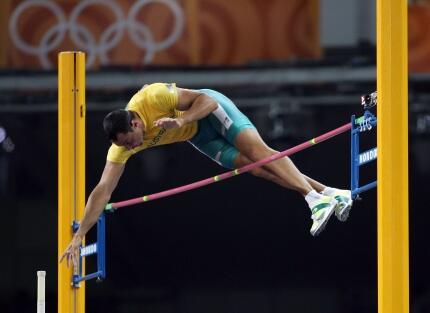
Athletics Australia - Freeman, Markov & Saxby-Junna inducted to Athletics Australia Hall of Fame ©Athletics Australia
Athletics Australia – Freeman, Markov & Saxby-Junna inducted to Athletics Australia Hall of Fame
Athletics Australia is delighted to announce the induction of Noel Freeman, Dmitri Markov and Kerry Saxby-Junna to the Athletics Australia Hall of Fame.
Honoured at the John Landy Lunch in Melbourne today, the trio join an illustrious list that includes Betty Cuthbert, John Landy, Ron Clarke and Catherine Freeman as inductees 32 through 34 respectively.
The Athletics Australia Hall of Fame was instituted in 2000 as part of the celebration of the Sydney Olympic Games and it acknowledges the wonderful careers and great feats of high performance achieved by those inducted.
NOEL FREEMAN
Inductee number 32, Noel Freeman began race walking in 1955 at age sixteen. Joining Footscray Harriers, he showed great talent immediately and as an intense trainer, it was appropriate Percy Cerutty should guide him.
After narrowly missing selection for Melbourne in 1956, at 17, Noel maintained his sights on the 1960 Games in Rome where he wanted to double. He gave the selectors little opportunity to leave him out, winning both trials.
In Rome, Noel went to the front in the 20km and led for the first 5km but by halfway Vladimir Golubnichiy led him by 23 seconds. By 15km the margin was 69 seconds. Noel came back strongly but could not quite catch the leader finishing just nine seconds adrift for silver. He was disqualified in the 50km after leading early.
After a clash with the then AAU about his attendance at a pre-Games camp that gained considerable media attention, Noel went to his second Olympics in Tokyo, finishing fourth in the 20km event.
Injury worries and a failed appeal meant that he missed selection for his third Olympics in Mexico but was chosen for the 1970 Commonwealth Games 20 mile event in which he prevailed in the race for gold by over two minutes.
By the end of his career Noel had won Olympic silver, Commonwealth gold and 9 national titles and set many world, commonwealth, national and state track records and road bests.
"I want to thank Athletics Australia for considering an old bloke like me, it is such an honour and I am truly humbled," Freeman said.
"I hope that those currently enjoying success in our sport stick with it because it is a truly wonderful sport and it has been a fantastic part of my life. There are so many people to thank for getting me to be the athlete I was, and I couldn't be happier with this award. It's fantastic."
DMITRI MARKOV
Dmitri Markov (inductee 33) won his first major international medal for his native Belarus at the World Juniors in Lisbon. In 1996 he won the European Indoor Championships then finished sixth at the Atlanta Olympic Games.
In 1997, Dmitri made the big decision to migrate to Australia with his wife Valentina, settling in Adelaide. There were hard calls to be made. He had to stand out of the 1997 World Championships and 1998 European Championships to leave open the possibility of Australian citizenship.
But once a fully-fledged Australian from 1999, Dmitri quickly made his mark, breaking the national record in Athens with 5.95m, before winning the silver medal at the 1999 World Championships in Seville at 5.90m.
Dmitri then relocated his family to Perth, following coach Alex Parnov.
At the 2000 Sydney Olympics in an intense final he tied for fifth.
For the 2001 World Championships in Edmonton, Canada the portents were good for a top result but after qualifying easily, things went astray. On the rest day he stubbed his toe on his bedpost requiring intense medical treatment and ten hours of icing.
In the final he opened at 5.75m, clearing on the third attempt. It left him in tenth place. He passed the next height of 5.85m.
With fierce determination he cleared 5.90m on his first to take the lead. Only Israeli Alex Averbukh stood between him and his and Australia’s first gold medal in pole vault at the Olympics or World Championships. As Averbukh exited, Dmitri sailed over 5.95m.
Despite the significant discomfort of his injury, Dmitri then had the bar raised to 6.05m setting the still current championship record. After his win he gave three bottles of champagne to the Australian team medical staff that had treated him.
Dmitri finished fourth in the Paris World Championships in 2003 and in his last major championship Dmitri won the silver medal at the 2006 Melbourne CommonwealthGames.
Chronic foot injuries plagued him and he retired in 2007. In a relatively short career he represented his adopted country on nine occasions and was national championfour times. As 2013 began, Dmitri is still ranked third on the World All-Time List for the pole vault.
"Coming to Australia was a big thing. I have been here since 1997 now and we spent two years not competing so that I could earn my Australian colours in accordance with the rules. We had a fantastic training environment and it has been a fantastic experience," Markov said.
"I would like to thank Athletics Australia for their support across the journey, they are the reason we stayed in Australia and it was a hard road that wouldn't have happened without them. I also have to thank my wife and family, they have always given me so much support," Markov said.
KERRY SAXBY-JUNNA
Born in Ballina inductee 34 Kerry Saxby-Junna, began her athletics career as a runner but switched to walking, very quickly finding her true calling to eventually win an amazing 27 national titles from 5000 metres to 20km over a period of 17 years.
The first of Kerry’s 23 Australian representations came in the Isle of Man at the World Walk Race Walking Cup in 1985 but it was in 1987 in Rome that Kerry was first at the forefront. In humid conditions, she led the 10km through half way in first appearance of women’s walking at the World Championships, before finishing second.
In 1989 Kerry competed in her second World Indoors in Budapest. Unlike the first when she was disqualified, there were no mistakes, winning in a new world record. When walking ceased to be part of the World Indoors in 1993, Kerry had been its most successful participant with a gold and two silvers.
In 1990 the women’s walk was finally introduced to the Commonwealth Games and in Auckland Kerry was supreme, winning by two minutes. She repeated four years later and took silver in 1998.
By 1999 the women’s walk had matured as an event, extended to 20km at Championship level. It seemed that Kerry was falling further behind her main overseas rivals but such thoughts underestimated a great competitive spirit. In the searing heat of Seville, seemingly against all odds and expectation Kerry finished a magnificent third at the World Championships. Her time – a quick 1:31.18 was surprise enough for the by-then 38 year old but she was even more shocked by the news of a medal – believing she had finished fourth.
In 2000, at her home Olympics in Sydney, by then a mother, she finished seventh. Kerry continued her career but in September after the Goodwill Games in Brisbane at 40 she closed her career – one that yielded 26 world records and world bests, nine major international medals and paved the way for the next generation of female walkers to enjoy similar opportunities to their male counterparts.
"The highlight of my career was probably when I got a telegram to say I had been selected to compete in Italy as a young athlete, and that drove me to push for the 1987 World Championships. I didn't expect to do half the things I did and I am honestly amazed at how much I have done," Saxby-Junna said.
"I obviously need to thank whoever it was that got me to AIS, it was the best thing for my career without question. I have to thank my coach Craig Hilliard and of course my parents who were there for me at a very young age."
Athletics Australia extends its sincere congratulations to the three inductees.
We thank Athletics Australia Statistician and Historian Paul Jenes, as well as the Special Awards Committee, for their efforts in making the presentations at the John Landy Lunch possible
Athletics Australia
