 EN
EN
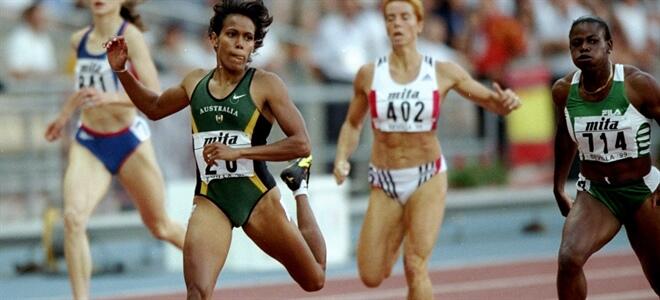
Today the athletics community celebrates one month to go until the 15th IAAF World Championships will thrill in Beijing (CHN) on 22-30 August 2015. ©Athletics Australia
Athletics Australia – News – BEIJING 2015
Today the athletics community celebrates one month to go until the 15th IAAF World Championships will thrill in Beijing (CHN) on 22-30 August 2015.
Athletics Australia and the broader athletics community are excitingly counting down to the start of competition, with the Australian Flame team continuing their preparation for action across the globe, including at the scheduled IAAF Diamond League event in London (GBR) this weekend.
The Australian Flame is currently 32-strong, plus three athletes who will compete in exhibition masters’ events. The team will expand further after the close of the qualification period on 9 August. A preparation camp will be held in Wakayama (JPN), before arriving in the host city of Beijing (CHN) on 19 August, three days out from the first session.
With thanks to David Tarbotton, we today utilise the milestone as an opportunity to reflect on the outstanding Australians who have been crowned world champions. Four men and four women have won 10 titles since the first championships were held in 1983. A two-part reflection, today we relive the achievements of our four golden women.
It all started with Cathy Freeman in 1997 and 1999, with her twin 400m victories in the lead-up to the Sydney Olympic Games, an achievement that was matched by Jana Pittman over 400m hurdles in 2003 and 2007. More recently in 2009, the Beijing-bound Dani Samuels claimed our fifth world title and, four years ago in Daegu (KOR), Sally Pearson delivered arguably the performance of the championship to win the sprint hurdles in a record time.
AUSTRALIAN HONOUR ROLL: Women IAAF World Champions
– Cathy Freeman (Vic) 1997 400 metres
– Cathy Freeman (Vic) 1999 400 metres
– Jana Pittman (NSW) 2003 400 metres Hurdles
– Jana Pittman (NSW) 2007 400 metres Hurdles
– Dani Samuels (NSW) 2009 Discus Throw
– Sally Pearson (Qld) 2011 100 metres Hurdles
CATHERINE FREEMAN: 1997 & 1999, 400 metres
Freeman’s remarkable success at the IAAF World Championships was a gradual thing. She initially travelled to the 1991 Tokyo-instalment, where she was a reserve for the 4×100 metres relay. Two years later at the 1993 championships, she graduated to the semi-finals of the 200 metres, and by 1995 she was running her specialty, the 400 metres, just missing a medal in fourth. She didn’t come home empty handed, however, anchoring the 4x400m relay to a bronze.
With the Sydney Olympic Games now just three years away, she was terrific at the 1997 World Championships. Going into Athens, Freeman led the world rankings, but after placing third in her semi-final she was drawn in the challenging lane one for the final. It was a close fought race as Freeman led at the 200m and 300m marks before withstanding a hard battle to the line from Jamaican Sandie Richards and American Jearl Miles-Clark. She won by 0.02 seconds in 49.77, winning the first ever 400m title from the inside lane. She celebrated her biggest win with both the Australian and Aboriginal flags.
In 1999, Freeman returned to the track after a truncated 1998 season due to injury. In the lead up to the world championships in Seville she had won all her 10 races and in the semi-final, running 49.76, indicated she was ready for the defense of her gold medal. In the round-of-eight she ran 49.67, her fastest time for two years to win.
JANA PITTMAN: 2003 & 2007, 400 metre Hurdles
A report of the 400 metre hurdles championship race in 2003 described Pittman’s win as ‘the biggest upset so far at the IAAF World Championships’. Recent world record breaker, Yuliya Pechonkina of Russia, was beaten into third place by Australia's 20-year-old Commonwealth Games champion and it was a famous result.
Pechonkina had been the clear favourite, more than a second faster than anyone else had run in the year. In the final she looked set for a sub-53 second time when she faulted at the eighth hurdle, remaining ahead at the ninth but slowing. Pittman was closing in and caught the Russian with 30 metres to go to win in a personal best of 53.22, making her the youngest ever world or Olympic champion at 400m hurdles.
The next few years were tough for Pittman. Just 17 days before the Olympic Games in Athens she had knee surgery but still managed fifth place. In 2005, after a promising season, she withdrew from the world championships with a stress fracture in her back. In her absence, the woman she beat in 2003, Pechonkina, took the title. Things improved in 2006 where she defended her Commonwealth Games crown.
Pittman’s build up to the 2007 event was also far from smooth. There was a pregnant pause when she gave birth in December 2006 to son Cornelis. She resumed training shortly after but was again halted with plantar fasciitis, missing 10 weeks preparation, but by July was running well in Europe ahead of the 2007 IAAF World Championships in Osaka.
In Japan, one of her main rivals would again be Pechonkina. Pittman ran a superbly controlled race from lane five to lead the defending champion to the line in 53.31, a season’s best.
“There is some truth to them saying that mummies come back strong. As a mummy you can do anything – there were three of us in the final today,” Pittman said.
DANI SAMUELS: 2009, Discus Throw
Producing one of the biggest surprises of the IAAF World Championships in Berlin (GER), Dani Samuels clinched the title in the discus throw, the first global discus title for Australia.
Samuels entered the competition with a personal record of 62.95m from 2008, but her coach Denis Knowles analysed her potential.
“I knew that she (Samuels) would have a chance to medal, though I did not think about the gold. When there were throws of 64 and 65 metres by two others I thought that is was going to be difficult to surpass them, but the bronze medal was always in reach,” Knowles said.
Then Samuels improved her personal best to 64.76m in round four and took third for the moment.
“Throwing 64 metres was fantastic for me, because then I was relaxed and that helped further improving in the next round. I knew that maybe there would be a chance to even win gold here. But everything would have to really fit perfectly together – and it did,” Samuels said.
Samuels with a dramatic 65.44m throw in the fifth round took the title. It was her second personal best on the soggy evening. Her win saw the youngest ever world discus champion join an elite group of a dozen athletes to have won the world youth, world junior and world championships titles.
SALLY PEARSON: 2011, 100 metre hurdles
Pearson’s 100 metre hurdles win in Daegu at the 2011 World Championships was described as ‘flawless’. It was the equal fourth fastest in history and broke a 24-year-old championships record.
Pearson had made her world championships debut, way back in 2003 when as a 16-year-old she ran in the 4x100m relay. She first hurdled at the 2007 World Championships where she progressed to the semi-final. The next year she hurdled to silver at the Beijing Olympics.
As the favourite for the title it looked like in 2009 she would climb to the top of the podium. But a torn disc in her lower back – not known at the time – was a massive handicap, restricting her to fifth in the final. Pearson makes no secret of the heartbreak of that race and it being the lowest point of her career.
“I went into those championships really defeated. I hurt my back two or three weeks beforehand. Then, my mind beat me,” Pearson said.
But two years on Pearson’s blistering pace and composure over the hurdles saw her win Australia’s first global title 100/80m hurdles title for 47-years.
“I just wanted this so badly. I've been focusing on that race for about a year now, making sure I got everything right,” Pearson said.
The huge disappointment of not even winning a medal at the last Championships two years earlier was finally erased from her mind. And as the year wound down, it was no surprise Pearson won many awards, but possibility the greatest was being honoured as the 2011 IAAF World Female Athlete of the Year.
Part two of this piece, a reflective look back on our male world champions, will be issued on Wednesday 29 July.
With thanks to David Tarbotton
Source: Athletics Australia – News
