 EN
EN
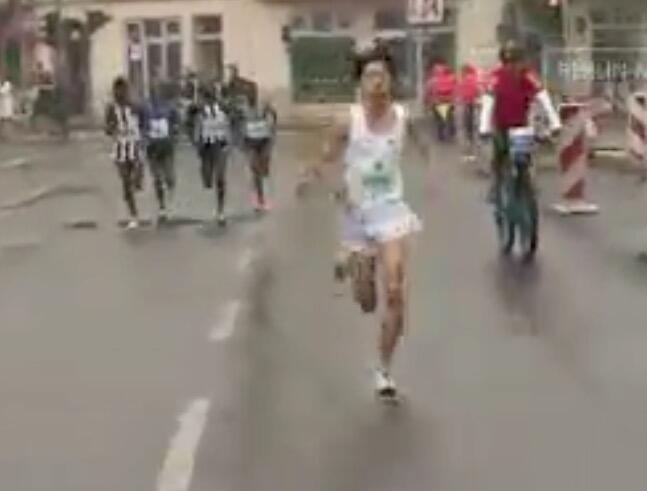
Shitara was swallowed up by the second group, a good turn of events as it was travelling ahead of Japanese national record pace on track for just sub-2:06. Shitara hung with the group through 25 km before starting to creep forward, drifting to high-2:06 pace by 30 km, high-2:07 by 35 km, and high-2:08 by 40 km. In the end he was well short of Toshinari Takaoka's 2:06:16 national record, but with a 2:09:03 for 6th Shitara took 24 seconds off his best with the fastest Japanese men's performance in Berlin since Takayuki Inubushi's then-NR 2:06:57 in 1999.
His Honda teammate Hiroaki Sano led Koji Gokaya (JR Higashi NIhon) and fellow sub-61 half marathoner Masato Kikuchi (Team Konica Minolta) on a steady pace around 2:10:30 until 30 km, after which point Kikuchi started to slip. Gokaya, like Sano a one-time sub-2:10 runner to date, was next, leaving Sano to gut out a 2:11:24 best for 7th. Gokaya was good for 2:14:28 for 13th, with Kikuchi marking a two-minute improvement over his 2017 Tokyo Marathon best in 2:15:32.
